
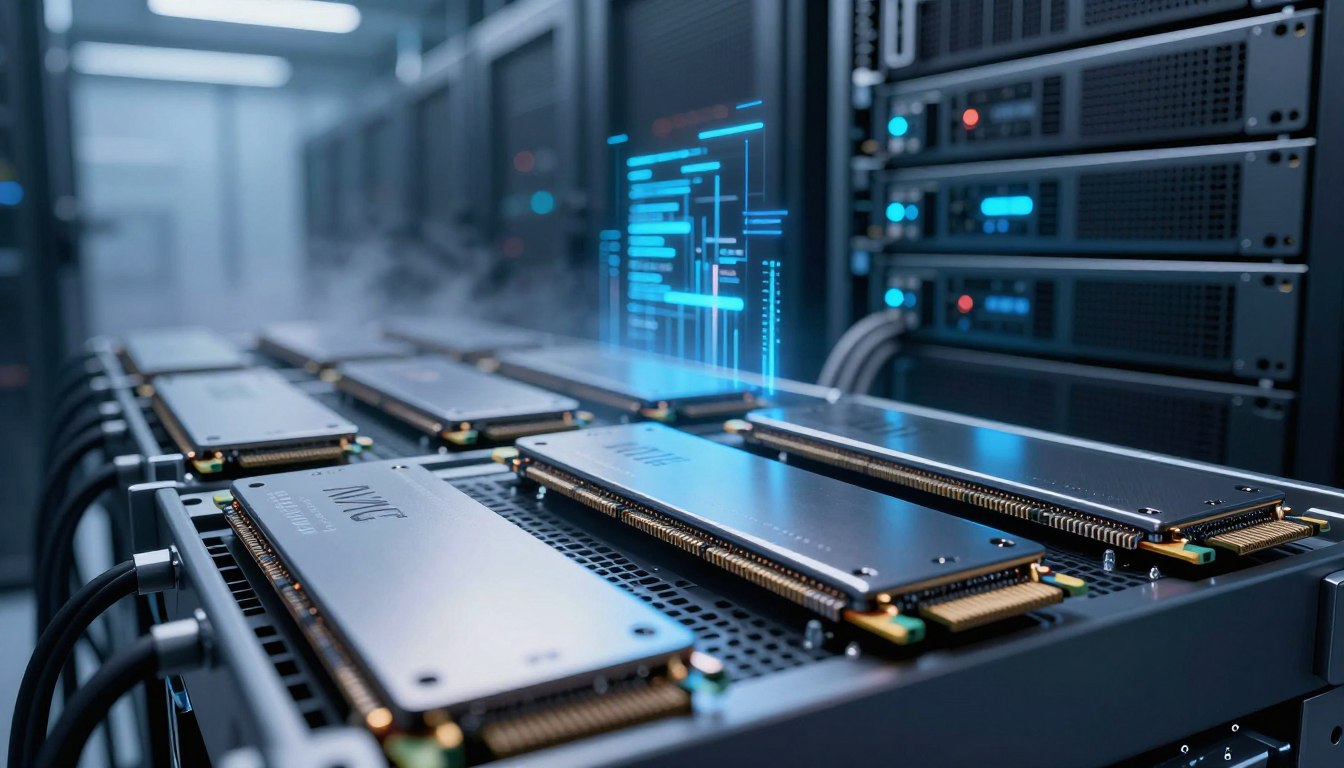
ReadySpace sees a clear pain point: the rent-based cloud model drags businesses down with subscription fatigue, hidden exit costs, and limited control.
We are sovereign infrastructure experts. We build private, high-grade environments that avoid the “Walled Gardens” of commodity providers.
Modern AI initiatives demand raw, predictable throughput and low latency to handle massive datasets. The public cloud often forces compromises—shared stacks, throttled I/O, and expensive egress.
ReadySpace delivers a private alternative: Proxmox-backed, bare metal hosting that restores control, reduces vendor lock-in, and keeps data where you need it.
In this article we promise a clear technical solution and a migration path. You will see how to move virtual workloads to dedicated infrastructure, preserve data sovereignty, and regain administrative control without sacrificing speed.
Key Takeaways
- Rent-based clouds create hidden costs and limit control.
- ReadySpace offers sovereign, private AI hosting with Proxmox expertise.
- Bare metal with direct storage delivers consistent throughput and lower latency.
- We provide a practical migration path from commodity providers to private infrastructure.
- Data residency and administrative control remain central to our approach.
The Performance Bottleneck in Modern AI Workloads
The real latency in modern AI pipelines often starts at the storage drive. When GPUs demand data, a slow drive wastes cycles and raises overall system latency.
A high-quality ssd keeps throughput steady. Even top-tier processors stall if ssds cannot sustain read rates or if the controller cannot manage bursts.
The storage interface matters — legacy links throttle large dataset transfers. Over recent years the industry moved to faster protocols to close that gap and reduce I/O stalls.
- Check drive queue depths and controller behavior to avoid latency spikes.
- Match ssds to your workload — sequential and random reads both count.
- Consider total cost and price over years, not just initial price.
Choosing the right drive factor affects everything from AI model training to gaming responsiveness. For guidance on staging high-throughput tiers, see our notes on high-performance storage and options like NVMe WordPress hosting.
Understanding NVMe Performance and Data Throughput
Storage throughput defines how quickly large models see the data they need. We focus on two things: sustained sequential read write rates and random I/O behavior. Both shape real-world latency for inference and training.
Sequential Read and Write Throughput
Sustained transfers matter when streaming large datasets. The Samsung 990 Pro delivers about 7,450/6,900 MBps sequential read/write, while the Corsair MP700 Pro XT can reach roughly 14.5 GB/s on modern PCIe 4.0 or 5.0 hosts.
Choosing the right m.2 ssd and interface—especially pcie 4.0—reduces wait time for batch loads and dataset staging.
Random IOPS and Latency
Random read latency and IOPS determine how fast small blocks arrive. The 990 series and other top nvme ssds use TLC NAND and DRAM cache to sustain this load.
Power efficiency and controller design also affect sustained throughput under full queue depth.
| Drive | Sequential Read | Sequential Write | Use Case |
|---|---|---|---|
| Samsung 990 Pro | 7,450 MB/s | 6,900 MB/s | Enterprise AI, servers |
| Corsair MP700 Pro XT | 14,500 MB/s | 13,800 MB/s | High-throughput inference |
| Black SN7100 | 5,000 MB/s | 4,500 MB/s | Energy-efficient servers, gaming |
Why Bare Metal Infrastructure Outperforms Virtualized Clouds
Dedicated hardware removes variability. When we provision bare metal, every drive and ssd sits on its own bus. That eliminates noisy neighbors and gives teams predictable latency under load.
By using dedicated pcie 4.0 lanes, each drive can sustain its rated read and write behavior. This matters for AI hosts and database servers where milliseconds add up.
We tune systems at the controller and interface level—not through opaque cloud controls. That lets us optimize queue depths, cache settings, and the physical form factor your workload needs.
We choose dedicated hardware when stability, data residency, and long-term costs outweigh the convenience of multi-tenant clouds.
- Control: Full admin access to tune the controller and storage stack.
- Consistency: Drives perform without virtualization overhead or contention.
- Right sizing: Select ssds, capacity, and chassis to match AI, database, or gaming needs.
For teams that require direct hardware access and predictable economics, explore our cloud bare metal plans at cloud bare metal. Over the years, dedicated infrastructure remains the safest choice for mission-critical workloads.
The Role of Sovereign Cloud in Data Residency
Keeping data inside national borders reduces legal risk and speeds compliance reviews. Organizations must prove where information is stored and who controls the hardware.
Compliance and Data Sovereignty
We run sovereign cloud infrastructure so your data stays within agreed boundaries. This helps satisfy auditors and regulators without adding cloud exit fees.
Control over hardware matters. We select ssds and drives, tune the controller and storage interface, and manage lifecycle over years to lower total price of ownership.
- Physical custody of drives ensures clear chains of custody for sensitive workloads.
- Our Proxmox Gold Partner status means virtualization is tuned for security and maximum hardware utilization.
- Private hosting avoids the legal complexity of foreign-controlled “Walled Gardens.”
| Feature | Benefit | Why it matters |
|---|---|---|
| Sovereign drives | Local jurisdiction control | Compliance and auditability |
| Managed ssds | Predictable read and write behavior | Consistent performance for AI and gaming |
| Controller & interface tuning | Optimized hardware use | Lower latency and better long-term value |
Leveraging Proxmox VE for High-Performance Virtualization
Proxmox VE gives us the tools to virtualize heavy I/O workloads without sacrificing predictable drive behavior.
As Proxmox Gold Partners, we tune the storage interface and the controller so virtual machines can sustain near-bare-metal read rates. We configure every ssd and drive to reduce queue depth and cut latency for AI and database hosts.
Proxmox VE also lets us manage complex storage clusters. That flexibility ensures your ssds and drives are used efficiently across nodes. Over the years we refined deployment patterns to keep virtualization from becoming a bottleneck for high-speed arrays.
- Optimized storage: tailored ssd profiles for latency-sensitive workloads.
- Cluster control: balanced drives and ssds across hosts to sustain throughput.
- Cost-aware tuning: we judge price versus long-term value and pick the right factor for each stack.
Choose our Proxmox-based solution and gain a scalable, secure foundation that supports AI, databases, and even gaming use cases with predictable results.
Optimizing AI Response Times with Low-Latency Storage
Fast AI responses depend on how quickly storage can serve tiny blocks of data. We tune each drive and ssd to favor low queue depth and fast random read access. That reduces stalls during inference and keeps throughput steady for model hosts.
Reducing Inference Latency
Low-latency drives cut inference time by delivering consistent random read rates. We prefer ssds with proven controller behavior so small I/O completes quickly.
This matters most for real-time applications — chat, search, or recommendation engines need predictable microsecond responses.
Dataset Loading Speeds
We optimize sequential read and read write paths so datasets stage rapidly. Faster bulk transfers shorten training loops and reduce wasted GPU cycles.
Replacing legacy hard drives with modern ssds yields clear gains in startup and batch load times.
Real-Time Model Updates
Compact modules like a 2230 ssd must balance power efficiency and low latency for edge scenarios. Even a steam deck used for on-site inference benefits from tuned storage.
Our infrastructure supports ssd gaming and best gaming workloads — the same low-latency demands that AI models require over years of operation.
| Use Case | Key Benefit | Typical Drive | Why it matters |
|---|---|---|---|
| Real-time inference | Fast random read | Enterprise ssd | Reduces response jitter |
| Dataset staging | High sequential read | High-throughput drive | Speeds training cycles |
| Edge updates | Power efficiency | 2230 ssd | Extends uptime in compact hardware |
| Gaming & AI testbeds | Low latency | Consumer ssds | Mimics production behavior |
Moving Beyond Walled Gardens of Commodity Providers
Commodity clouds often sell convenience while quietly limiting how you optimize storage and hardware.
We help teams escape those limits by offering dedicated bare metal where you control every drive. That control lets you pick the right ssd, tune the controller, and choose the interface that fits your use case.
Owning infrastructure removes hidden costs and the unpredictable behavior of shared storage. You avoid opaque billing and the steady rise in egress and management fees.
Over the years, we have migrated enterprises to sovereign, high-quality stacks. They reclaim performance, lower long-term price, and gain the flexibility needed for AI, gaming, and critical services.
| Challenge | ReadySpace Solution | Business Benefit |
|---|---|---|
| Locked storage stacks | Dedicated drives and controller tuning | Predictable latency and control |
| Hidden cloud fees | Transparent billing for bare metal | Lower total cost over years |
| Limited hardware choice | Custom ssd selection and interface options | Right-sized systems for gaming and AI |
To evaluate a migration, start with a short pilot on our cloud server plans and see how direct control changes results.
The Impact of NAND Flash and Controller Efficiency
Not all flash is created equal — the choice of NAND and controller shapes real-world drive behavior.
TLC NAND offers better write endurance than QLC and gives fewer surprises across years of heavy I/O. For mission-critical hosts, we prefer drives built on TLC NAND to reduce wear and maintain steady service.
TLC NAND vs QLC Reliability
Controller efficiency matters as much as raw flash type. A smart controller keeps write amplification low and extends drive life. That is why we recommend high-end models.
- Choose the Samsung 990 Pro or Corsair MP700 when you need consistent behavior across board.
- For compact builds pick a trusted m.2 ssd in the right form factor — the Samsung 990 and Black SN7100 cover many use cases.
- Evaluate power efficiency and thermal profiles to keep racks cool and costs down under load.
Whether you select a Seagate FireCuda, the 9100 series, or another best ssd, focus on NAND quality and controller design.
Strong flash and efficient controllers let drives sustain heavy write cycles, lowering operational risk and total price over years.
Security Benefits of Dedicated Bare Metal Environments
A private rack gives you a physical barrier and auditable custody that multi-tenant clouds cannot match.
When we control the entire storage stack — from the controller to each drive and ssd — we remove a class of risk that shared environments simply cannot address.
Physical isolation prevents cross-tenant access and reduces attack surfaces. That means your AI models and datasets stay separated and verifiable.
We enforce strict chain-of-custody rules and hardware sanitization. Our ssds and drives are tracked, logged, and wiped according to policy.
- Hardened storage: locked chassis, controlled access, and regular audits.
- Dedicated stack: no noisy neighbors — only your data touches your drives.
- Long-term assurance: proven practices over years to protect IP and compliance needs.
Choosing bare metal is more than raw throughput — it is an investment in a sovereign, secure foundation that lowers long-term price and risk.
Scaling AI Models with Sovereign Infrastructure
Scaling large models demands infrastructure that keeps compute growth aligned with storage capability. We design sovereign stacks so compute density never outpaces the I/O tiers that feed it.
Resource Allocation for AI
We assign CPU, GPU, and storage quotas with precision. That means each host gets the right number of drives and the correct ssd profile for its workload.
Predictable allocation reduces wasted cycles and lowers long-term price by avoiding overprovisioning.
- Match drive count to concurrent model runners.
- Tune the controller and interface for low queue depth.
- Reserve ssds for latency-sensitive tasks like real-time inference and gaming testbeds.
Managing Compute Density
We scale servers in measured steps so storage capacity and read bandwidth rise with compute. This prevents stalls during large-scale training runs.
Over the years we refined patterns that keep clusters balanced and secure in sovereign environments.
| Resource | Storage | Business Benefit |
|---|---|---|
| High compute node | Multiple drives, enterprise ssd | Reduced latency, steady throughput |
| Inference fleet | Low-latency ssds | Fast read, consistent responses |
| Staging cluster | High-capacity drives | Lower cost per TB over years |
We ensure every drive and ssd performs at peak so your team focuses on models — not infrastructure.
Proxmox Backup Server and Data Integrity
Proxmox Backup Server gives us a reliable safety net for every drive and dataset we host. It protects model weights and large training sets from corruption or accidental deletion.
We integrate this backup solution into our sovereign cloud so your primary ssds remain focused on serving workloads. Dedicated backup drives hold immutable snapshots and speed recovery without taxing production storage.
Configuration matters: our team aligns the backup interface and controller settings with the primary ssds to keep read cycles predictable. That reduces recovery time objectives and avoids surprises when you need a restore.
- Immutable backups that protect datasets for compliance and audit.
- Dedicated drives for quick restores and lower impact on active storage.
- Tuned interface settings so backups coexist with high-speed arrays.
Over the years we have learned that a robust backup strategy is the cornerstone of reliable AI hosting. For setup details and a migration path, see our Proxmox backup VM guide.
Integrating cPanel and WordPress for Enterprise Hosting
We bundle cPanel and WordPress on dedicated bare metal to give enterprises a fast, secure web platform. This approach keeps control in your hands — from the drive selection to the ssd profile and storage stack.
Optimizing Web Hosting Performance
We tune the controller and interface so WordPress sites load consistently under heavy traffic. That tuning reduces variability and keeps database read times predictable.
Security and sovereignty remain core. Hosting on our sovereign cloud applies the same hardening we use for AI workloads — audited drives, tracked ssds, and strict access controls.
- Rapid cPanel deployment with full admin control for teams.
- Storage settings optimized for dynamic pages and database-driven apps.
- Scalable drives and ssds chosen to match traffic and growth factors.
- Lower long-term price through right-sized capacity and lifecycle planning over years.
We deliver enterprise-grade hosting that balances speed, reliability, and administrative control.
Future-Proofing Your Stack with PCIe Standards
PCIe advances change what a single drive can deliver — and that shifts architecture decisions.
PCIe 5.0 now offers up to twice the sequential speeds of pcie 4.0. That jump matters when you design storage tiers for AI, gaming, or large databases.
We help teams pick the right m.2 ssd and motherboard pairing so upgrades are smooth. Choosing a best m.2 ssd today reduces overhaul work in the future.
- Compatibility: match the controller and slot so drives sustain advertised read rates.
- Longevity: select ssds like the samsung 990 or 990 pro for proven durability and steady behavior over years.
- Flexibility: plan for 9100 pro or other best ssds if you need larger lanes later.
By aligning interface, form factor, and controller choices now, you protect upgrade paths and control total price. We guide the transition so your drives and ssds stay relevant as standards evolve.
Technical Considerations for Infrastructure Migration
Migration planning starts by auditing the storage paths and the interface each drive uses. We catalog controllers, lanes, and the ssd form factors so cutover is predictable.
Next, we run validation tests on each controller and ssd. These checks show how drives behave under steady load and how quickly they can read real datasets.
We design a migration that keeps downtime minimal. That means staged moves, parallel syncs, and a brief cutover window so teams can keep working.
- Audit and report: full inventory of drives, controllers, and storage paths.
- Compatibility checks: verify interface mappings and ssd form-factor fits.
- Staged migration: sync data, test on the target, then flip services with minimal disruption.
We also evaluate existing drives and recommend upgrades when needed. Our goal is steady performance and a clear long-term price picture so your stack stays efficient for years.
We provide a clear roadmap and hands-on support — so your data residency and security requirements are preserved during the move.
Evaluating Your Current Storage Bottlenecks
Begin with measurements: raw read times, queue depth, and interface throughput reveal where latency hides.
We audit your use of pcie 4.0 lanes and the behavior of nvme ssds to compare current drives against leaders like the samsung 990 pro.
Next, we check random read rates and dram cache use. That tells us if a drive also meets model-serving needs or if it stalls under concurrent I/O.
We review form factor and interface choices—m.2 ssd slots, 2230 ssd fits, and legacy hard drives that may be slowing the stack.
- Controller health: verify firmware, lanes, and queue tuning.
- NAND checks: inspect nand flash wear and TLC NAND endurance.
- Reality check: compare against best ssds and best m.2 options like the Corsair MP700 and Black SN7100.
| Area | What we test | Outcome |
|---|---|---|
| Interface | pcie 4.0 lane mapping | Confirm sustained bandwidth |
| Drive | Random read, dram cache | Detect I/O stalls |
| Form factor | M.2 NVMe slots / 2230 fits | Avoid physical bottlenecks |
We measure first, then recommend upgrades—so you buy the right drive and avoid needless price or risk.
Conclusion
A controlled infrastructure gives businesses predictable costs and fewer surprises.
Transitioning to sovereign, bare metal systems removes common storage and latency bottlenecks. We pair dedicated hardware with expert-led virtualization so your stack runs with steady responsiveness and clear ownership.
Our approach keeps data residency, auditability, and administrative control front and center. That lowers legal risk and simplifies compliance while cutting long-term price and operational uncertainty.
We provide hands-on migration planning, validated hardware choices, and a clear roadmap to escape commodity cloud limits.
Ready to move your infrastructure to a secure, sovereign environment? Apply for a ReadySpace Infrastructure Audit and Migration Roadmap.
FAQ
What makes NVMe bare metal faster for AI response times?
Bare metal eliminates hypervisor overhead and shared I/O contention. Dedicated PCIe lanes and direct-attached M.2 storage reduce latency and increase sustained throughput, so models load and infer quicker — especially with high-bandwidth drives like Samsung 990 Pro-class devices.
Where do modern AI workloads typically hit bottlenecks?
Bottlenecks appear at storage I/O, memory bandwidth, and interconnects. Large datasets and frequent model swaps strain sequential read/write channels and random IOPS. Fixing the storage layer — faster controllers, better NAND, and more direct PCIe 4.0 links — often yields the largest gains.
How do sequential read and write speeds affect dataset loading?
Sequential throughput governs how fast large model files and dataset shards stream from disk into RAM. Higher MB/s reduces stage-in time for training or inference. In practice, drives with strong sequential read/write numbers shorten cold-start and batch-loading phases.
Why do random IOPS and latency matter for inference?
Inference can involve many small reads and writes — metadata, checkpoints, and tiny tensor slices. Low-latency random IOPS lower tail latency and improve consistency, which translates to smoother, more predictable AI response times under load.
Why does bare metal outperform virtualized cloud instances for intensive AI tasks?
Bare metal provides exclusive access to CPU cores, memory, and storage hardware. That avoids noisy-neighbor interference and virtualization penalties. For I/O-bound workloads, avoiding abstraction layers gives measurable improvements in throughput and latency.
How does a sovereign cloud help with data residency for AI projects?
Sovereign clouds keep data within defined legal jurisdictions and provide controls for residency, access, and audit. This is essential for regulated industries that train models on sensitive datasets or must demonstrate compliance with local laws.
What compliance considerations should we plan for with sovereign infrastructure?
Plan for encryption-at-rest, key management, audit logging, and clear data-handling policies. Map regulatory requirements to technical controls — such as isolated storage, dedicated networking, and contractual clauses — to ensure governance and traceability.
How can Proxmox VE support high-performance virtualization for AI workloads?
Proxmox VE supports KVM-based VMs and LXC containers with direct PCIe passthrough, enabling near-native access to GPUs and high-speed NVMe drives. It also offers flexible storage backends and clustering, which helps balance performance with manageability.
What storage changes reduce inference latency?
Reduce seek times and improve IOPS by using M.2 NVMe drives with DRAM caches or host-managed caching. Prefer TLC NAND with robust controllers over slower QLC for frequent writes. Also, configure I/O queues and file systems to suit low-latency access patterns.
How can we speed up dataset loading for large models?
Use high sequential read throughput drives, parallelize data reads across multiple drives, and keep hot datasets on the fastest media. Employ prefetching, memory-mapped files, or in-memory caches to minimize repeated disk access during training or serving.
What enables real-time model updates with minimal disruption?
Atomic deployment strategies — rolling updates, canary releases, and staged data swaps — paired with fast storage and snapshot-capable backup systems let you update models with little downtime. Low-latency storage ensures new artifacts become available immediately.
Why should organizations move beyond commodity cloud provider lock-in?
Moving beyond single-provider ecosystems increases control, reduces vendor lock-in risk, and allows custom hardware choices optimized for AI workloads. Sovereign or bare metal offerings give transparency over infrastructure and predictable billing.
How do NAND type and controller efficiency impact drive longevity and cost?
Controller algorithms and NAND quality determine write amplification, endurance, and thermal behavior. TLC NAND with a strong controller balances durability and cost. QLC lowers price per gigabyte but sacrifices endurance and sustained write capability for heavy workloads.
Is TLC NAND preferable to QLC for AI storage?
Yes — TLC typically offers better write endurance and steadier throughput under sustained writes. For active datasets and frequent checkpoints, TLC reduces the risk of slowdowns and premature wear compared with QLC media.
What security benefits do dedicated bare metal environments provide?
Dedicated hardware reduces attack surface from noisy neighbors and shared software stacks. You gain stronger isolation, exclusive control over firmware and key management, and clearer forensic trails — important for sensitive model data and regulated workloads.
How do we scale AI models effectively with sovereign infrastructure?
Scale by provisioning dedicated compute nodes, sharding datasets across fast local storage, and using orchestrators that respect resource locality. Sovereign setups let you plan capacity with predictable network and storage performance.
How should we allocate resources for large model training?
Prioritize high memory, NVMe-backed local storage for dataset staging, and GPU/CPU balance based on the model architecture. Allocate I/O and network bandwidth to prevent bottlenecks during checkpointing and distributed training.
What does managing compute density involve for AI clusters?
Compute density management balances thermal limits, power draw, and I/O capacity per rack. Use tiered storage (fast local M.2 plus shared object stores) and plan rack layouts to avoid congesting PCIe fabrics or network links.
How does Proxmox Backup Server help maintain data integrity?
Proxmox Backup Server offers deduplicated, encrypted backups with verification and retention controls. It integrates with virtualization hosts to create consistent snapshots and makes restores predictable — reducing the risk of data loss during model development.
Can cPanel and WordPress be used for enterprise hosting alongside AI services?
Yes — cPanel and WordPress handle web hosting workloads while backend AI services run on dedicated infrastructure. For enterprise needs, optimize hosting with caching, CDN, and separate storage tiers to keep web and AI I/O isolated.
How can we optimize web hosting performance when integrating with AI endpoints?
Separate content delivery from model inference. Use edge caches and CDNs for static content, and route API calls to dedicated bare metal or sovereign endpoints. This keeps site responsiveness high while serving AI-driven features.
Why should we consider future PCIe standards when buying storage?
PCIe roadmap affects upgrade paths and bandwidth headroom. Selecting platforms that support PCIe 4.0 today — and are ready for 5.0 — protects investment and allows higher throughput drives to be adopted without major hardware overhauls.
What technical factors are critical during infrastructure migration?
Assess data gravity, I/O patterns, and dependencies. Plan for consistent snapshots, verify compatibility of controllers and file systems, and stage migrations to avoid long downtime. Test performance in pilot runs before full cutover.
How do we evaluate current storage bottlenecks?
Monitor sequential and random throughput, IOPS, queue depth, and tail latency during peak loads. Correlate metrics with application traces to find hotspots. Target fixes where the largest latency or throughput gaps appear — typically the storage stack or network fabric.

Comments are closed.